Friday, December 16, 2011

Play blues guitar like The Rolling Stones' Mick Taylor...


Play blues guitar like The Rolling Stones' Mick Taylor

Unglue those Sticky Fingers with this tab and audio lesson

Guitar Techniques/Guitar-X (John Wheatcroft)

It's the 5th of July 1969 and arguably the biggest rock and roll band in the world are about to take to the stage. The venue is Hyde Park and upward of half a million Rolling Stones fans are enjoying the sunshine and waiting with eager anticipation to witness the debut performance from the new boy, Mick Taylor.

They're also waiting to pay their respects to the band's much loved ex-guitarist and founder member, Brian Jones, who had been found dead just two days earlier. No pressure there then.

At that point Mick was just out of his teens and fresh from his three-year apprenticeship with John Mayall's Bluesbreakers, a particularly fertile training ground for superb blues guitarists when you consider his predecessors were legends Eric Clapton and Peter Green.

Taylor's addition to The Rolling Stones seemed to breathe new life into the band, with his lyrical and melodic guitar style inspiring a change of direction to include more country-blues and folk elements within the group's sound. It's undeniable that Mick's contribution greatly expanded the Stones' sonic palette, and helped them to achieve and maintain what many consider to be the quintet's creative and commercial peak.

Whilst Mick continues to maintain his position as one the UK's supreme blues guitar talents, with numerous releases to his name as both a band leader and as a sideman, we've decided here to concentrate on the Rolling Stones period of his career. His contribution to one of the greatest bands of all time was massive, and deserves all the recognition and praise we can bestow upon it.

There are two complete solo studies for you here, the first using orthodox playing technique over a C7 straight eighth-note groove, whilst the second solo, over a standard 12-bar progression in E, showcases Mick's technique of executing slide in standard tuning. Whilst there are many guitarists that have adopted this method successfully - Joe Walsh, Jeff Beck, Brett Garsed etc - this area is widely considered to be Taylor's speciality.

Arguably his take on standard tuning slide guitar sounds the most 'authentic' (ie, open tuning and fingerstyle) which considering the unorthodox nature of its execution is no mean feat.

As always, treat these solo studies as the springboard to further exploration, and remember to have fun. It may only be rock and roll, but how we like it!


Next page: audio and tab examples

« Previous |Page:123| Next »

Thursday, December 15, 2011

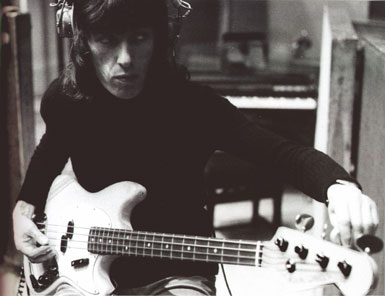
BILL WYMAN :“It’s a very different group than the one that played 50 years ago.”


“Balls In The Bottom” – A Q&A With Bill Wyman

Bill Wyman left The Rolling Stones in 1992. He was one of the five founding members — along with Brian Jones, Keith Richards, Mick Jagger, and Ian Stewart. (Drummer Charlie Watts didn’t join until 1963.) In a recent interview with Rolling Stone magazine, Jagger said of the current incarnation of the Stones (which includes Ron Wood on guitar, Darryl Jones on bass, and sidemen like Chuck Leavell and Bobby Keys), “It’s a very different group than the one that played 50 years ago.”

In the intervening decades as a non-Stone, Wyman has busied himself with a series of projects, from recording and touring with his all-star group The Rhythm Kings, to writing books and managing his Sticky Fingers restaurant in London. As the Stones machine begins to crank up for a possible 2012 tour (it’s rumored he’ll rejoin the band for the proposed 50th anniversary concerts), Wyman talks about the difference between playing in the Stones and the Rhythm Kings, how he emulates the songwriting of the 1930s, and what he learned from some of the great bass players before him.

Did The Rhythm Kings grow out of your desire for a more eclectic repertoire?

It was in the very beginning. But it was also the same thing when I put a band together in ’85, for Ronnie Lane of The Faces, when he had MS and we did some charity shows with Eric Clapton, Jimmy Page, Jeff Beck, and we came to America and did ten shows. After that, I did an album, called Willie And The Poor Boys, and I called the band. Charlie Watts was on it with me, Ronnie Wood was on the video and Ringo. It was very successful, so that was pretty much a forerunner of the Rhythm Kings, because we did a mixture of roots music again.

It’s that whole mixture, and it’s lovely to do. There’s no pressure either. We’ve got no pressure to make hit records, or massive-selling albums, or record companies kicking us up the backside. We don’t have any of that so it’s just a pleasure to do it. You do it for the love.

The recent Rhythm Kings tour featured Mary Wilson from The Supremes as a vocalist. Do you remember the first time you met Mary?

Well, Mary, I knew her when we did the T.A.M.I. Show, November ’64 in California. We did the T.A.M.I. show and they were on it, The Supremes, as was many other people like Chuck Berry, James Brown, Marvin Gaye, Leslie Gore, and so and so on. We met her there and Diana [Ross], of course. They were the first ones who came over and talked to us, because we were pretty much not very well known at that time in America. It was nice to have somebody; the others didn’t take much notice of us, really. They came over and were really nice so we always thought nicely of them.

How did you come to collaborate with Madeleine Peyroux on “The Kind You Can’t Afford”?

I was in the south of France and I went to Nice Jazz Festival to see B.B. King, because I’ve known B.B. for years. So I want backstage and had a chat with B.B. And then I heard that Madeleine Peyroux was on the next [stage], we’d just missed her show actually. But I had her record so I went next door and had a chat with her and her band and we got on very well.

The following spring she got in touch with my office, because I gave her a card and said, “If you’re ever in England, just give us a bell, maybe we’ll go out and have a bite to eat and a drink and meet the family.” I sent her a song, so she rang up and said, “I want to know if I can come over and we can write some songs together.” So she came over to London and she stayed at a hotel and came over every afternoon for four or five days. We cut a bunch of ideas and demos. She chose the two songs that we did for her album, which turned out quite nice.

When I write for The Rhythm Kings I try to write in the style of the time. I don’t write what we do today. I’ve tried that before in solo recordings, it’s not quite where I’m comfortable at. I can get away with it sometimes if I do songs that are a bit tongue-in-cheek. I’ve had some success like that across the world, not so much in America, but pretty much everywhere else. So I decided to write songs that sounded like they’re from the ’30s or the ’50s, and it kind of works. I don’t know why, but it comes quite easily to me so I’ve written quite a lot of songs.

You’ve compared this type of songwriting with another of your interests, archeology.

You’re finding little treasures and bring them to life, exactly like you do with archeology. I find something from the 1920s, like Ethel Waters singing “My Handyman” or something like that, and I say to [Rhythm Kings vocalist] Beverley [Skeete], can you do this? And it comes out great.

What’s the difference between being on tour with the Stones and playing with The Rhythm Kings?

They’re very talented, my band. We’re on a 10-week tour. We had to learn seven new songs for Mary, and six new songs for the band. We always try to do new songs; every singer in the band has a new song. So it’s 13 new songs to learn, and then sharpen up on all the other stuff that we do, because we don’t play that regularly. We did it in three afternoons. We go over to the rehearsal rooms and we do that. We cut the tracks and make sure we’ve got them all right and then we go on the road. Which is a bit different than Stones. When I was in the Stones, we used to rehearse for a month, to learn songs we’d been playing for thirty years. It was quite bizarre. It always irritating to me how long it took to do things. But it worked for them, and it worked very successfully.

Obviously the Rhythm Kings are very versatile in all these kinds of styles. Why weren’t the Stones as versatile?

They are in a way, but they’re just lazy. [Laughs] Or they’re just casual about it. When I do rehearsals we say, “Alright, 12 o’clock ’til eight.” Everybody gets there at 12 o’clock and we all leave at eight. If you say that to the Stones — “Alright, rehearse tomorrow from 12 ’til eight” — me and Charlie will arrive at 12 o’clock. Mick will arrive at half past one. Woodie and Keith will arrive at four o’clock. That’s the way it always was. And if it’s an evening session, sometimes people won’t even arrive at the studio ’til 3:30 a.m., and then you’ll work ’til one o’clock the next afternoon. It’s bizarre, but that’s the way it worked. That’s the way Keith worked. It was very, very difficult for me — and Mick wasn’t very happy about it — because we’re more, sort of, organized with our lives. Keith just flies about, he’s a free bird. He doesn’t stick to times or anything. That’s the way he is so you have to live with it. Sometimes it can be very frustrating.

When did you first start writing songs for Rhythm Kings?

I had some ideas when we first went in the studio, and we cut like eight tracks in three days. We do every thing in three takes, maximum. If we don’t get it in three takes, we just dump it and move on to the next song, no matter what it is. A lot of them are take one, and quite a few are take two. So you don’t mess around. I was finding ideas and so was Terry Taylor, my co-writer. We’d do the music and I’d put the lyrics together and then we’d present it to the band and one of the band would [sing] it.

I just tried to capture the atmosphere of the time of what I was thinking that song suited, whether it was the late ’30s, or whether it was jump music, around the time of Fats Waller, trying to use the local slang, try to use the kind of melodies they would sing backing vocals to, and different kind of horn arrangements.

Jeff Beck said to me, “Where did you get ‘Motorvatin’ Mama’? Where’d that come from, who did that originally?” I said, “No, I wrote that.” He said, “Get out of it, that’s a ’30s song.” I said, “I wrote it, it just sounds like one because we made it sound like that and I’m using lyrics that are familiar to that time.” And then he said to me, “Who plays bass on it?” And I said, “I do.” And he said, “No you didn’t. That’s a double bass on there and you don’t play double bass. Your hands are too small.” That’s me playing bass but I’m trying to make it sound like a double bass, because that’s what was being used at the time.

Who were some of the bass players that influenced you?

Willie Dixon is the principal one. Most of the other [double bass players] in the ’30s, I don’t even know their names. We’re not aware of who they are. I always idolized Willie Dixon, particularly, because he was on with Chuck Berry and Little Walter, Howlin’ Wolf, and many others at Chess. I tried to play with the simplicity of Duck Dunn of Booker T.’s band. He’s a great mate of mine, and I idolized him before I even met him. He played with simplicity; he was there, he didn’t stick out. He didn’t get in the way of anybody. He just did the right things in the right spaces. His timing was perfect. That’s what I tried to do, right from the very beginning and it worked for me — that’s my style.

I’m not a busy bass player. I’m not a Stanley Clarke or anyone like that. To me, they should be playing guitar, not bass. And Ronnie Wood does that. When he played bass in the Stones sometimes, he used to say, “What do you think, Bill? Do you like me bass?” And I said, “Ron, it sounds like a solo guitar bit.” Doo-ding-ding, it’s all up there [meaning high notes on a bass guitar]. You need some balls in the bottom. I always kind of joked to him about it. You leave the space for other people, you don’t fill it in with the bass. Leave lots of room and let the track breathe from underneath. Piano can add to that, or whoever. Guitars, organ, horns. But don’t fill it up.

Proper Records has recently released a collector’s edition box set of all The Rhythm Kings

Keith Richards + King Tut’s Grandma – Celeb Look-Alikes...

Keith Richards + King Tut’s Grandma – Celeb Look-Alikes

Richards Grandma Tutu

Dave Hogan / Handout, Getty Images

When it comes to rock ‘n’ roll royalty, few artists are revered more than Rolling Stones guitarist
Keith Richards. So we were a little nervous about including him on a look-alikes feature with King Tut’s Grandma, someone who’s been dead for thousands of years, but you tell us – do the photos lie?

Last year Richards published his long-awaited memoir entitled ‘Life,’ and the thick tome did little to dispel the iconic outlaw rebel image he has spent decades cultivating simply by living his. Richards is the ultimate rock survivor, and his notoriety as the “world’s most elegantly wasted human being” has led to a running joke that he’s a walking dead character, a sort-of mummified form of a person who is lucky for simply still being alive.

Which brings us to the mummy we have above. The photo of the famous King Tutankhamun’s grandmother was taken during a display of the royal Egyptian family’s mummified remains last year in Cairo, and we couldn’t help notice a striking similarity to a certain mummified royal figure in rock.

Don’t get us wrong, we love Richards. But the 67-year-old rocker does have many reasons to count his blessings — and one definitely is that his body is holding up after all these years.

Do you think that Keith Richards and King Tut's Grandma Look Alike?
Next: See Tommy Lee’s Celeb Look-Alike

***THANKS TO ''ULTIMATE CLASSIC ROCK''.***

Tuesday, December 13, 2011

Will.i.am single 'T.H.E. (The Hardest Ever)' featuring Mick Jagger: music video...


Will.i.am single 'T.H.E. (The Hardest Ever)' featuring Mick Jagger: music video


The music video for the Will.i.am single "T.H.E. (The Hardest Ever)" featuring Mick Jagger and Jennifer Lopez has premiered on December 11, 2011.

As previously reported, the single was released on November 20, 2011, immediately after Will.i.am and Lopez performed the song on the 2011 American Music Awards.

The song clocks in at about four minutes, 45 seconds. Jagger is on the song about a minute before the song ends. Jagger appears in the music video for the song as a singer who is in outer space.

(Click here to watch the music video.)

"T.H.E. (The Hardest Ever)" is the first single from Will.i.am's fourth solo album,"#willpower," which is due out sometime in 2012. The single, which has gotten mostly negative reviews from music critics, has bombed in the United States. Just one week after "T.H.E. (The Hardest Ever)" debuted at No. 36 on Billboard's Hot 100 singles chart, the song dropped to No. 90.

Will.i.am is a founding member of the Black Eyed Peas. The group currently on hiatus.

Will.i.am and Mick Jagger at the Rock and Roll Hall of Fame 25th Anniversary event in New York City, on October 30, 2009
Credits:
WireImage

Video: Will.i.am featuring Mick Jagger and Jennifer Lopez: "T.H.E. (The Hardest Ever)" music video

Sunday, December 11, 2011

Ronnie Wood - Ronnie Wood Wants To Work With Mark Ronson ...


Ronnie Wood - Ronnie Wood Wants To Work With Mark Ronson

09 December 2011 06:47:34
Mark Ronson picture

Ronnie Wood Wants To Work With Mark Ronson


Ronnie Wood would be ''honoured'' to work with Mark Ronson and the band who played on Amy Winehouse's 'Back to Black' album.

Ronnie Wood is planning to work with Mark Ronson.

The Rolling Stones rocker would be "honoured" to work with the producer and the Dap Kings, the group of musicians who recorded with Amy Winehouse on her 'Back to Black' album.

Mark said: "We'd love you to come out and play on some stuff."

Ronnie replied: "I'm going to hold you to it with Amy's band, you want me to play any sessions you're going do, Mark. I'm definitely going to do that, what an honour for me to play with Amy Winehouse's band.

Mark admitted Amy - who was found dead at her London home in July - was the most talented singer he has ever worked with.

Speaking to Ronnie on his Absolute Radio show, he said: "Her voice is so good, you forget. I mean, because I've heard it so many times it kind of just like becomes so abstract. Then I listen to her sing, I'm just like 'She's the best singer I ever worked with', you know."

As well as producing 'Back to Black', Mark worked with Amy on a cover of 'Valerie' for his album 'Version' and while the single was popular, the producer told how Amy preferred an earlier version they recorded of the track.

He explained: "We recorded it, the original way we recorded it is much more of like a Curtis Mayfield soul-type record, and then we'd done eight takes of that and everyone's packing up their guitars, and at the last minute I was kind of like 'Can we just do one with like the You Can't Hurry Love beat'.

"So it was like one of those things where it was kind of like lucky that we just, as they're out the door, we cut it like that. But the original way is the way that she really loved it and it was kind of her favourite version, it's a version that I guess she always meant it."

Rolling Stones - The Rolling Stones Paying For Blues Guitarist's Funeral...


Rolling Stones - The Rolling Stones Paying For Blues Guitarist's Funeral

December 2011
Mick Jagger (Centre) And Keith Richards (Right) picture

The Rolling Stones Paying For Blues Guitarist's Funeral


Sir Mick Jagger and guitarist Keith Richards are paying for the funeral of blues guitarist Hubert Sumlin, who died last week.

The Rolling Stones are paying for the funeral of blues guitarist Hubert Sumlin.

Singer Sir Mick Jagger and guitarist Keith Richards are personally putting up the money for the send off of the Chicago blues musician - the long time guitarist for legendary singer Howlin Wolf - who passed away last week aged 80.

Hubert's partner, Toni Ann Mamary, wrote online: "Mick Jagger and Keith Richards have insisted on picking up the full expenses for Hubert's funeral. God Bless the Rolling Stones."

The 'Let's Spend the Night Together' band have long acknowledged their debt to Hubert's playing style and his influence on their music, and Keith played on his 2006 album 'Them Shoes'.

Paying tribute, Keith wrote: "With sorrow I received the news of Hubert's passing. He put up a long hard fight. To me he was an uncle and a teacher and all the guitar players must feel the same as myself. "Warm, humorous and always encouraging, he was a gentleman of the first order. Miss him, yes, but we have his records. All my condolences to his family. One love, Hubert."

Mick added: "Hubert was an incisive yet delicate blues player. He had a really distinctive and original tone and was a wonderful foil for Howlin' Wolf's growling vocal style. On a song like 'Goin' Down Slow' he could produce heart-rending emotion, and on a piece like 'Wang Dang Doodle' an almost playful femininity. He was an inspiration to us all."

A private service for Hubert will be held in Homewood, Illinois on December 13. A public service for fans will be held a day earlier at the Festa Memorial Funeral Home in Totowa, New Jersey.


Thursday, December 8, 2011

JAGGER/RICHARDS TO PAY FOR HUBERT SUMLIN FUNERAL...


Mick Jagger - Rolling Stones Stars To Pay For Sumlin's Funeral

08 December 2011 16:11

Rolling Stones Stars To Pay For Sumlin's Funeral


Sir Mick Jagger and Keith Richards have offered to pay for Hubert Sumlin's funeral, according to the blues great's widow.

The guitarist passed away in New Jersey on Sunday (04Dec11) after suffering heart failure at the age of 80.

Jagger paid tribute to the star in the wake of his death, saying, "Hubert was an incisive yet delicate blues player. He was an inspiration to us all."

Now it has been revealed Jagger and his Rolling Stone bandmate Richards, who played on Sumlin's 2006 album Them Shoes, will pick up the late star's funeral expenses.

His partner Toni Ann posted online, "I just wanted to share with you, Hubert's loving fans, that Mick Jagger and Keith Richards have insisted on picking up the full expenses for Hubert's funeral. God Bless the Rolling Stones."

A public service for fans will be held in New Jersey next Monday (12Dec11), while a private ceremony in Illinois will take place the following day (13Dec11).